
Sell An Inherited House In Orange County
Inherited homes and trusts
Selling an inherited house in Orange County
The bills did not stop.
There is property tax and insurance and a water bill, and somebody has to handle all of it while also finding the will, calling the bank, and working out what happens to a car. The estate does not wait for you to be ready.
And you have not really had a minute to sit with any of it.
Sometimes a clear path forward is the best option.
See My OptionsOr call or text Justin: 949-881-4454

- Family-owned & local
- 440+ Orange County sellers helped
- Verified Google reviews
- No fees, no commissions
- Licensed since 2004, DRE# 01448577
- BBB accredited
Trusts and probate · No repairs, no cleanout
What actually happens, and when
Almost none of this is common knowledge, and two of the items are deadlines. Read it before you decide anything.
The day it happens
Legally, nothing happens to the house
It does not transfer to anybody, it does not go anywhere, and nobody has to do anything that week.
The bills keep arriving. Property tax, insurance, utilities, the HOA, and the mortgage if there is one. They do not pause and nobody tells them.
The first few weeks
One fact decides everything: was the house in a trust?
In a trust
The named trustee can act, usually with no court involvement. The house can normally be sold once the trustee is in place.
Not in a trust
Probate. A court process, and it commonly runs many months. The sale generally waits on the court.
If you do not know which applies, that is the first thing to find out, before any decision about selling. It changes the timeline more than anything else on this list.
Soon after
The county finds out
A change of ownership has to be reported to the County Assessor.
The new property tax is tied to the date of death, not to the date somebody gets round to the paperwork. Filing late does not delay it. It arrives later and backdated.
Within one year, and within three
Two deadlines, and they are not the same length
To keep your parent’s low property tax, a child has to make the home their primary residence and file for the homeowners’ exemption within one year. The claim for the exclusion itself is a different form, generally due within three years.
Miss either one and it is not automatically over.
The Assessor may still apply the protection going forward from the year you file. You lose the years in between, which can still be a lot of money, but it is not the cliff edge you may have been told about.
What does close the door is selling the house. The claim generally has to be on file before that sale closes, so ask your County Assessor before you list.
If the house is going to be rented out or kept as a second home, it is reassessed in full either way.
These are the deadlines families lose, because the first year is spent grieving and sorting out an estate, and nobody mentions a clock.
Within two years
Only if it was a husband or wife
A surviving spouse may keep the full $500,000 tax exclusion if the house sells within two years of the death, they have not remarried, and the couple met the ownership and residence tests before the death. After that it generally halves.
Read that against the reset below before you act on it. In California the whole house often resets to its value on the day of death, which can leave little or no profit to exclude. So this is something to check with a CPA, not a clock to race.
The part that usually works in your favor
Decades of growth are generally not taxed
The tax starting point on the house resets to its value on the day your parent died.
Which is why selling an inherited house produces a far smaller tax bill than most families expect.
Get a date-of-death appraisal. It is the document that proves the number, and it is much harder to get a year later.
None of this is legal or tax advice. Two of these items are deadlines, so take them to a CPA or an estate attorney rather than to us.
Justin is a licensed California real estate agent, DRE #01448577. He is not an attorney, a CPA or a tax advisor. Everything above describes how these rules generally work in California. It is not a reading of your family’s situation, and only your own estate attorney or CPA can give you that. Talk to them before you decide anything.
You are the one who has to explain this to everybody else
Usually one person is handling it. The trustee, or whoever took your mother in, or whoever happened to be closest when it all started.
That person makes the calls, signs the paperwork, and then has to tell everyone else what happened and why.
And somebody’s brother has a friend who told him that cash buyers lowball families in exactly this situation.
He is not wrong. There are buyers who do that. Your family is right to be careful.
So you get the numbers in writing, with where each one came from, in something you can forward to anyone who asks. If your sister wants to get on the phone and ask her own questions, we will take that call. If an appraisal would settle it, get an appraisal.
You should not have to defend a decision using information only you have seen.
“Justin was such a pleasure to work with! Knowing that I was dealing not only with the loss of a dear family matriarch, but had the added tension of family disagreements, he was supportive and patient through the entire process. He walked me through the different options available and never pressured me into making any decisions.”
Karla Poling · Google review
The house is harder than the sale
The sale is not the hard part. Most families work that out in a couple of conversations.
The hard part is the house itself. Forty years of a life in it, and almost none of it sorted by value. There is the stuff that is worth something, the stuff that is worth nothing and matters enormously, and a great deal that is simply going to have to go. Somebody has to be the one who decides, and nobody wants to be that person, least of all with a sibling watching.
Then there is the logistics of it. People flying in, sometimes more than once. Things that need shipping across the country. Items that have to reach a specific cousin because that was always the understanding. A car. A storage unit nobody knew about.
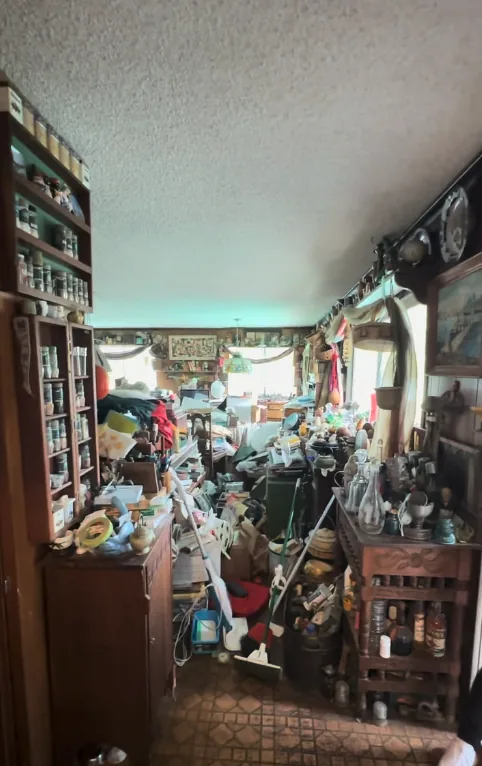
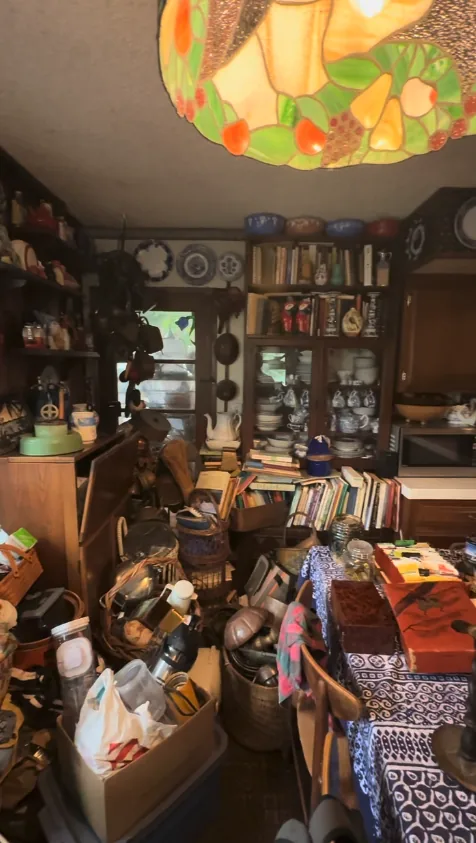
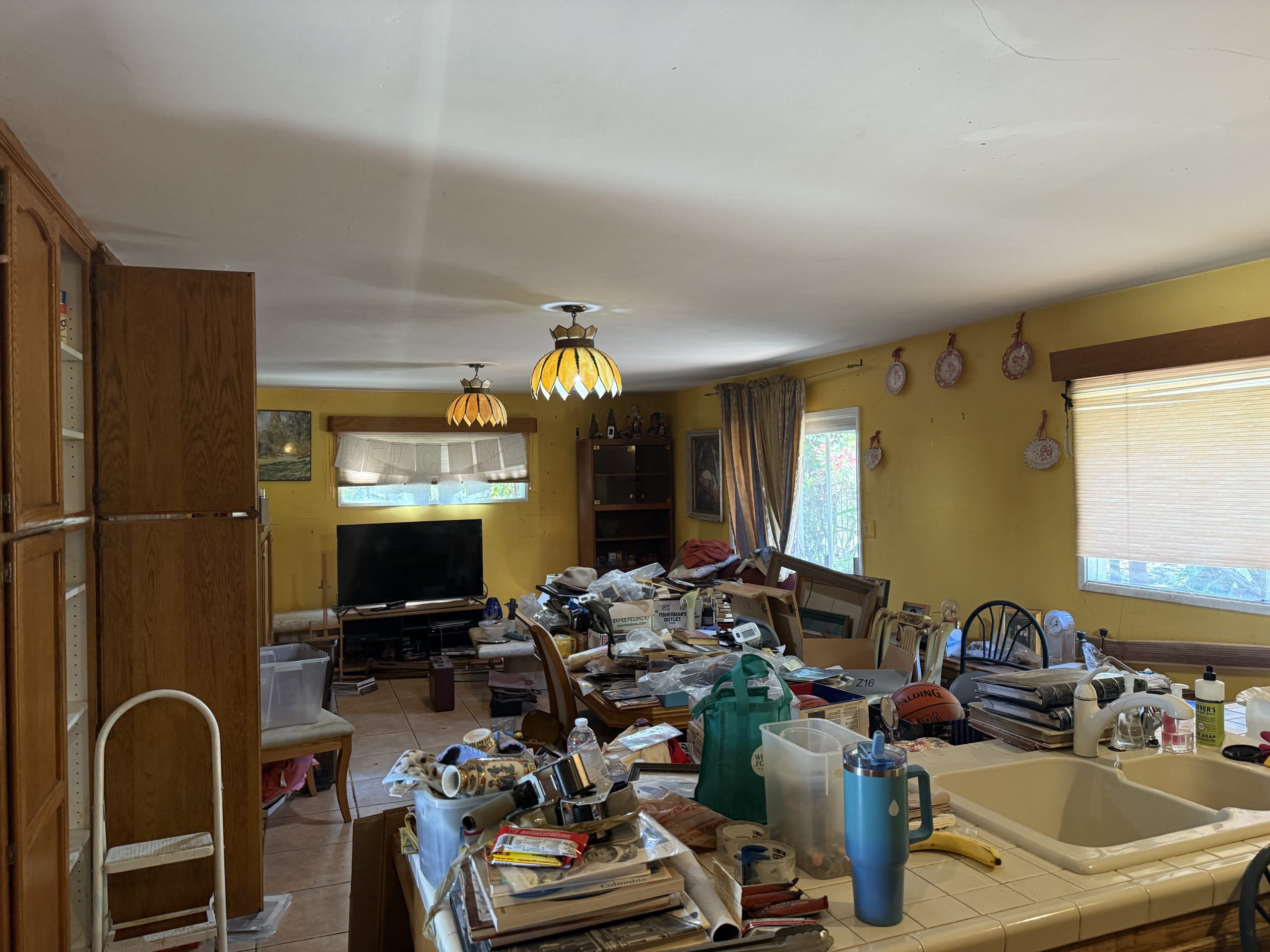

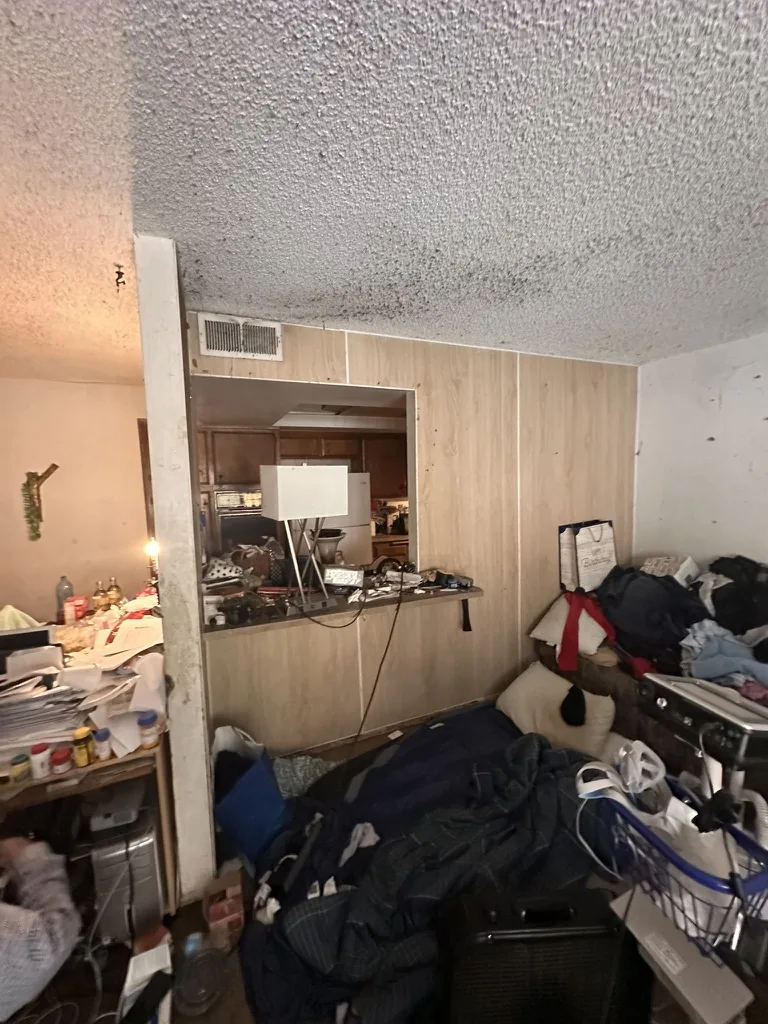
Five different houses. Every one of them sold without any of this being sorted first.
You do not have to finish any of that before you talk to us, and you do not have to finish it before you sell.
Take what matters. Leave the rest where it sits. We are not going to send you a list of things to clear out.
It does not have to be a fixer
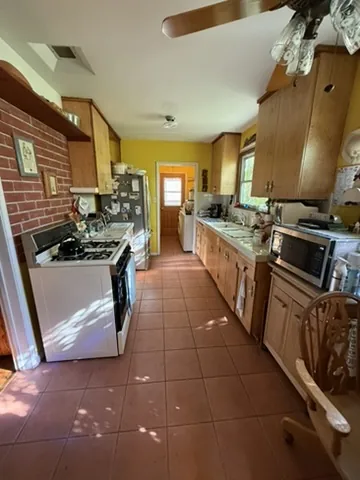
A house somebody lived in for thirty or forty years is usually not a wreck. It is dated. The kitchen is from another decade and the bathrooms have not been touched, but it was looked after, because it was a home rather than an investment.
The house does not have to be a problem. The situation is what matters.
On a well-kept house more than one of the options below is open to you, which is the part most families do not know.
Four ways to sell it
Which one is right depends on the house, the timeline, and what the family needs to happen. Sometimes that is us. Sometimes it isn’t, and we will tell you.
Before you do anything, ask somebody about the taxes
This is the part families find out about afterward, which is the worst time to find out about it.
When a house passes to you after someone dies, the tax on any profit is usually worked out very differently than if they had sold it while they were alive. Depending on how long your parents owned the house and what it is worth now, that difference can be large. Orange County has had forty years for it to get large.
We are not going to advise you on your taxes and neither should anyone else who is trying to buy your house.
What we will do is tell you it is a real question, early enough that you can ask your CPA before anything is signed rather than after.
The same goes for property taxes going forward. California changed the rules on inherited property and what families used to assume is no longer true. Worth understanding before anyone decides to keep it and rent it out.
Read about Prop 19 and inherited property taxes →
Again: Justin is not an attorney, a CPA or a tax advisor, and nothing on this page is legal or tax advice. Prop 19 and capital gains work differently for every family. Ask your own CPA or estate attorney what your situation means before you decide to sell, keep or rent.
One we handled · our account, not a review
She flew out for a long weekend and stayed over a month
The trustee on one estate flew out to Orange County expecting to be here for a few days.
The house had to be packed. Bills were still arriving and still had to be paid. There were cars to sell. There were decades of belongings to go through, item by item, working out what mattered and to whom.
And the family was not in agreement about any of it. Some of them had not spoken in a long time, and now they were being asked to decide together what happened to the house they grew up in.
None of that is the sale. All of it has to happen anyway, and nearly all of it lands on one person.
What we could do was take the house itself off her list. No repairs, no cleanout, no showings to schedule around while she was sorting through her parents’ things. One fewer thing on a list that was already far too long.
The highest offer is not always the best offer
This one is worth a minute, because it costs families real money every year.
A family we had been talking to from the beginning took a number about two hundred thousand dollars higher than ours. It did not make sense against anything the neighborhood supported, but it was the highest, so they signed.
One day before closing, that sale fell apart. By then the family had already put a deposit down on their next home.
Here is one of the sellers, in her own words:
“If you are unsure which quick sale home buyer to trust, then you should work with Justin Tanos at We Buy Houses in OC. One day before close, they canceled the deal stating that they had over valued the property. A deposit on a new home had already been made. Faced with having to start over, Justin understood our hesitation to trust another company. As a sign of good will, Justin provided a realistic assessment of the home’s value backed by analysis, and amended several terms of the sales contract we suggested to give us every assurance the sale would close. The home sale closed on time, at the agreed upon price, with no surprises.”
Yvonne · Google review
There is a second cost in that story that is easy to miss. By the time the family was free of that contract, there was no longer enough runway to take the house to market, which had been a real option at the start. The delay did not cost them money directly. It cost them their best alternative.
Every cash offer that came in afterward was lower than the one they had turned down at the beginning.
An offer is only worth what the person making it can actually close. We do not put a house under contract unless we know we can close on it, and we will tell you plainly when a number you have been quoted does not look real to us. And if the terms we propose are not enough to make you comfortable, tell us what would be, the way Yvonne did.
Selling to us is not always the right answer
If the house is in decent shape and nobody is under pressure, listing it will often net the family more, even after commission.
If the family wants to keep it, that is worth looking at honestly rather than talking anyone out of.
And if you have an offer from somebody else that looks better than ours, show it to us. We will tell you what we think of it, including when we think you should take it.
Questions that come up on these calls
The house is in a trust. Does that change anything?
No. We handle trust sales regularly. The trustee signs.
It is going through probate. Can we still sell?
Usually yes, though the timeline depends on where the case is. Tell us where things stand and we will tell you what is realistic.
Do we have to clean it out first?
No. Take what matters to the family. Leave everything else.
My brother and sister are not sure about this.
Then they should be part of the conversation. We will get on a call with anyone, send documentation you can forward, and we are fine with you getting an appraisal if that is what settles it.
Does it need repairs?
No. Not the roof, not the plumbing, not the kitchen nobody has touched since the eighties.
We all live out of state. Is that a problem?
No. Most of this happens by phone and email, documents sign electronically, and a neutral escrow company handles the money. Nobody has to fly in for closing.
Free & No Obligation
Tell us where things stand
You will explain the situation once. Justin will call you himself, usually within a few hours. He will ask about the house, whether there is a trust, and what the family needs to happen.
Nothing gets decided on that call.
Or call or text Justin directly: 949-881-4454
Prefer to talk? Call Justin: 949-881-4454